Ulpotha is a stay in Galgiriyawa, North Western Province, Sri Lanka. This page records what the property publishes about its building, across the eight pathways this index reviews.
Photography: Ulpotha's published media
The recordSpecified · read 6 Aug 2026
Current as of
6 Aug 2026
Last reviewed
6 Aug 2026
Coverage
Documented across 8 of 8 pathways.
Strongest evidence
Specified
Sources
Each entry shows its source and the date we read it.
Practical details
Type
Stay
Operator
Independent, bookings through East Pole Holidays FZCO
Rooms
11 adobe guest huts, twin share
Stage
Operating
Price band
From USD 2,940 per person for a two week retreat, all inclusive of accommodation, meals and yoga, Ayurveda treatments extra
Eleven adobe guest huts, twin share, in a working organic village at Galgiriyawa in Sri Lanka's North Western Province, open since 1997.
A closer look at Ulpotha
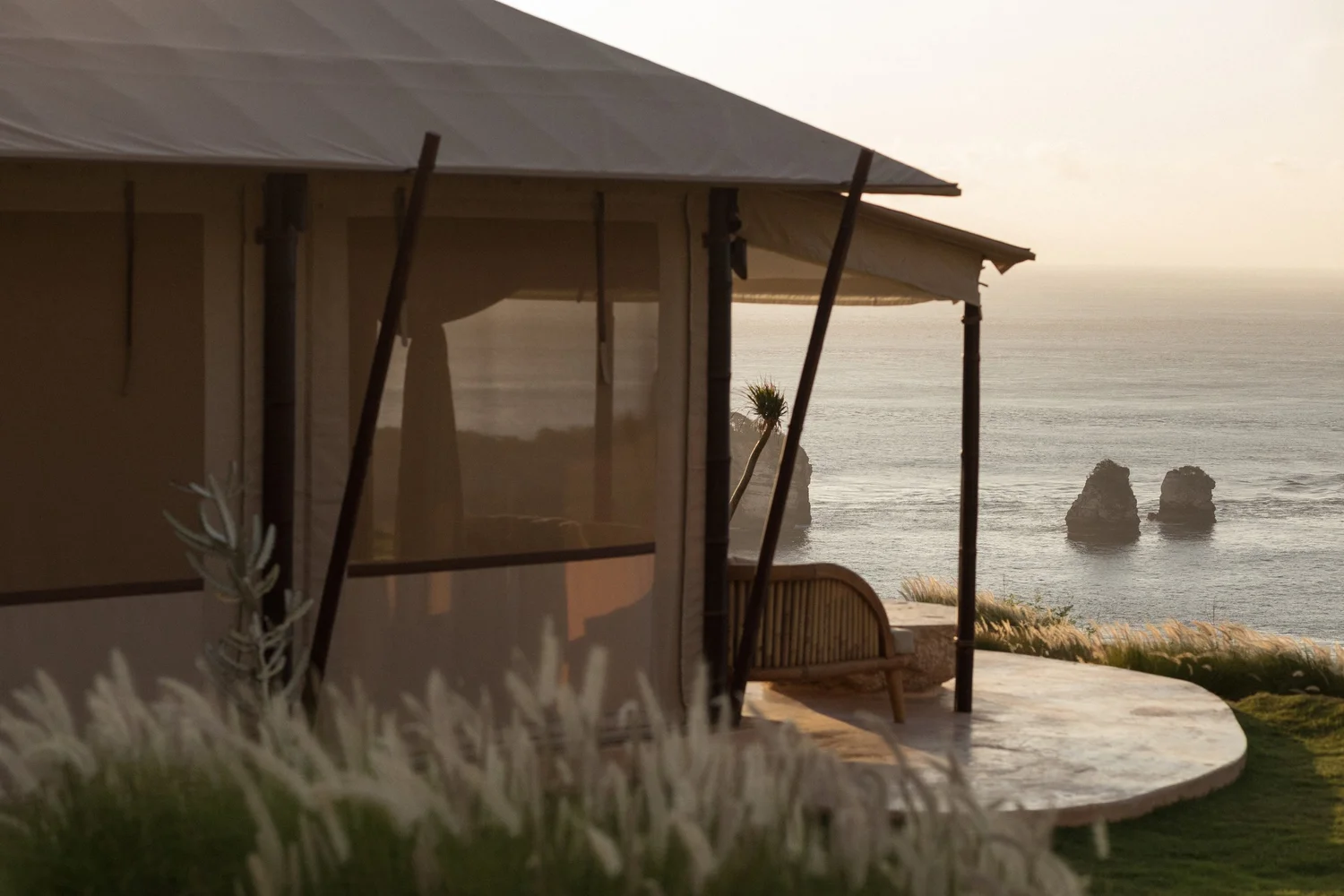
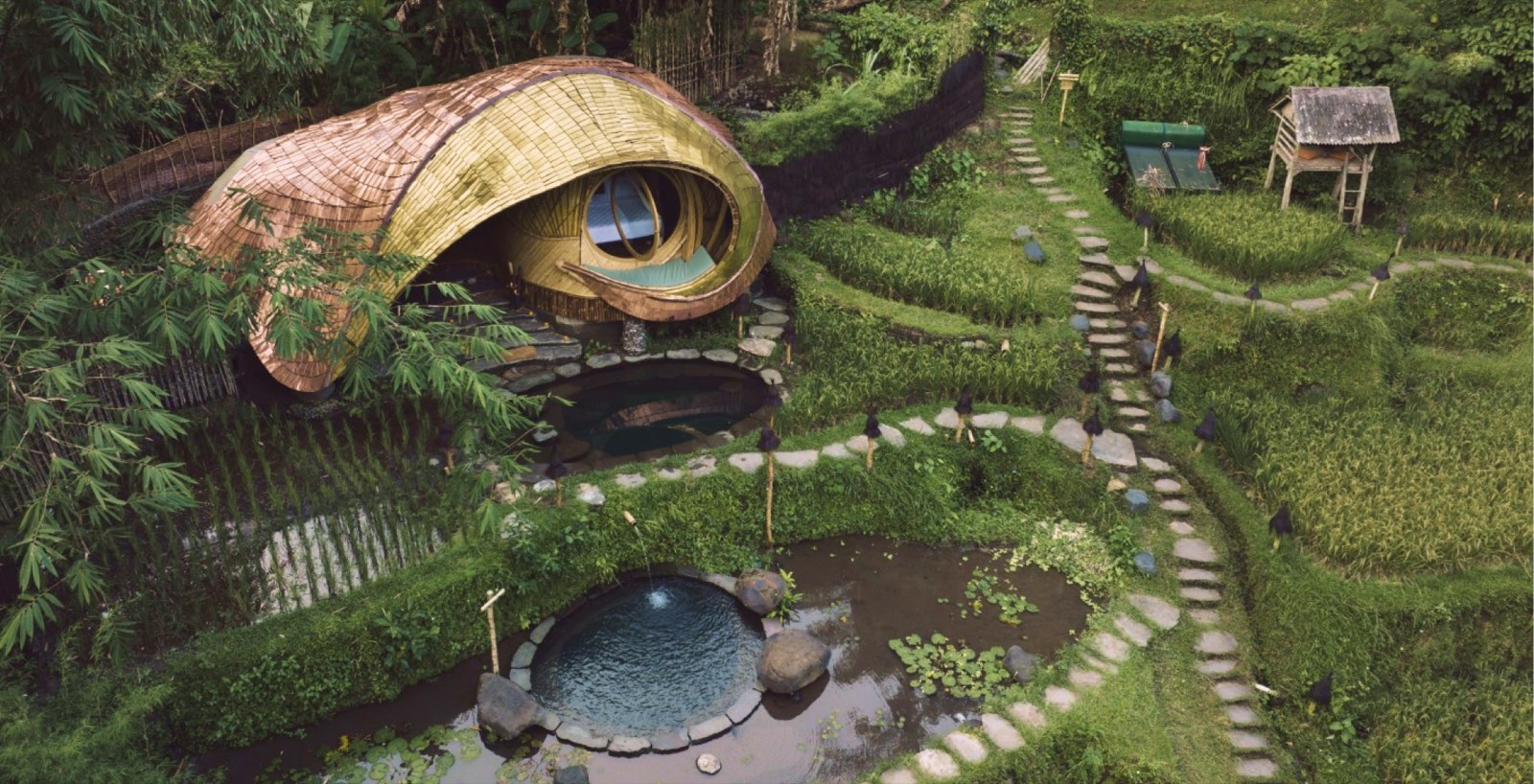
Eleven adobe guest huts, twin share, in a working organic village at Galgiriyawa in Sri Lanka's North Western Province, open since 1997. The huts are open sided, with no windows, no doors and no glass, a thatched cadjan roof and a mosquito net around the bed. Walls are clay rich soil, water, cattle dung and straw over a woven wattle lattice, floors are compacted earth, and every hut is hand painted twice a year with natural coloured clays. No power line runs to the village and there has been no wifi since it opened.
The spaceUlpotha publishes the village layout as following the puranagama model, in which forest, water, land,…
Ulpotha publishes the village layout as following the puranagama model, in which forest, water, land, agriculture and a tree shrine form one whole. The roofs are steeply pitched, deep eaved cadjan on hardwood columns, some of them living trees. No concrete or steel reinforcement is used. Showers are outdoor, stone built, shared and cold; hot water for a separate bathing area is heated in pans over a fire and held in clay pots. There is no air conditioning, and lanterns are supplied in each hut for after dark.
What this property publishes, area by area
All eight areas, for every record. Each row opens to what was published, where we read it and when.
Publishing something is not the same as it being good. Every line below was read and placed by a person, not scored by a machine. What each rung means
Named means the property published something you can look up: a brand, a product or a number. Stated means it says so with nothing behind it. Not published means we looked and found nothing, which is a gap in our reading and not an answer about the building.
Air Ecology2 source notesPublished or supplied
The air in a closed room is what you breathe for eight hours. What decides it is the filter grade, the fresh air rate, and whether damp has ever been looked for.
Ulpotha publishes that guest huts are open sided with a thatched roof and a mosquito net over the bed, with no mechanical ventilation described.
Why, when you stay at Ulpotha, do you stay in adobe huts, made from mud with no windows and no doors?
What to ask them
What filter grade is fitted to guest room air handling, for example MERV 13 or HEPA H13?
What is the fresh air supply rate per person in a guest room?
Are carbon dioxide, particulate or volatile organic compound levels measured, and are the readings published?
Is there a mould inspection and remediation protocol, and when was it last run?
Are there gas cooktops, fireplaces or other combustion sources inside guest rooms?
Water Integrity5 source notesPublished or supplied
You drink it, cook with it and stand under it. What is in it depends on the source and on what, if anything, filters it, and both are things a property can name.
Ulpotha publishes that its water comes from a well, with no treatment train described.
Ulpotha uses age-old organic and bio-dynamic farming methods to protect its flora and fauna and its spring-fed wells.
What to ask them
What is the water source, and what treatment is applied before it reaches a guest room?
Is there a published contaminant test panel, and which laboratory ran it?
Is shower and bath water filtered, and to what specification?
How are pools and spas sanitised, and is the chemistry published?
How is drinking water delivered, and is it treated on site?
Light Rhythm4 source notesPublished or supplied
Light is what tells a body the time of day. The part a building controls is what its fittings emit and when, which a named product or a colour temperature makes checkable.
Ulpotha publishes both that there is no electricity and, on the same page, that there is little electricity, and that paths and accommodation are lit by lamps and lanterns.
By design there is no electricity in Ulpotha and life is lived by the rhythm of the day. Paths and accommodation are lit by lamps and lanterns, with the twinkling glow of firelight creating a captivating and romantic sense of times gone by.
Ulpotha publishes that exterior lighting consists of solar lights placed in trees and oil lamps along paths and beside the sleeping huts.
There are solar lights placed in the trees and oil lamps along the paths and beside the open-sided mud-and-thatch huts where you sleep.
Ulpotha publishes that there are no curtains in guest huts because there are no windows or walls in the conventional sense, so no blackout provision is described.
You’ll have lanterns in your hut to guide you to the bathrooms after dark.
What to ask them
Is guest room lighting tunable or circadian, and what specification is published?
What colour temperatures are used in the evening, and are fixtures flicker free?
Do sleeping areas have full blackout, and is it specified?
What daylight access does a typical room have?
Is exterior lighting shielded or reduced overnight?
EMF Harmony3 source notesPublished or supplied
Wiring, routers and devices put electromagnetic fields in a room. What a building decides is where they sit relative to the bed, and whether anyone has measured it.
Ulpotha publishes that no mains supply reaches it. The village named here is the property itself, which its own pages describe as a working organic village. This is the absence of grid infrastructure, not engineered shielding or switching, and no field reading has ever been published.
Ulpotha has had no wifi since it opened in 1997. There's no electricity in the guest areas. The absence of connectivity is just how the place is built.
On mobile signal the property contradicts itself on a single page. Its FAQ states there is no phone signal, and four sentences later states there is a signal by the lake. Both are recorded here because neither is a measurement and the record does not resolve what the property has not.
There is a signal up by the lake should anyone need to phone home or receive a call.
What to ask them
Are guest rooms wired for data, or is access wireless only?
Where are wireless access points and smart meters placed relative to the bed?
Have field levels been measured in sleeping areas, and by whom?
Can a guest have wireless disabled in their room on request?
Is any shielded cabling or shielding material specified in the build?
Materials and Textiles5 source notesPublished or supplied
The things you sleep on and touch: the mattress, the sheets, the pillows, and the paints, glues and finishes around them. A named fabric, a fibre content or a certification can be looked up. A structural palette tells you about the building, not about the bed.
Ulpotha publishes the composition of its hut walls as clay rich soil, water, cattle dung and straw or dried grass fibre over a woven wattle lattice.
This woven framework is then covered on both sides with a thick mixture of clay-rich soil, water, and organic binders. Traditionally, and at Ulpotha, this mixture incorporates cattle dung, which adds plasticity, binding strength, and natural pest-repellent properties, along with straw or dried grass fibres that prevent cracking as the wall dries.
Ulpotha publishes that hut floors are compacted earth sometimes finished with a thin layer of dung and clay.
Every hut is hand-painted twice a year with natural coloured clays, reflecting the beauty of Sri Lankan village traditions.
Ulpotha lists the bed, mosquito net, towels and a sarong supplied in each hut without publishing fibre content, mattress composition or textile certification.
Inside, you’ll find comfortable beds with voluminous mosquito nets, cupboards, fresh water, towels, and a sarong to wear and take home.
What to ask them
What are the mattresses made of, and are they treated with flame retardants?
What is the fibre content of the linen, and is it certified, for example to GOTS or OEKO TEX?
Which paints, adhesives and sealants were specified, and are they low emission?
What cleaning and laundry products are used, and is the list published?
Are there named low emission certifications on the flooring or joinery?
Food and Kitchen5 source notesPublished or supplied
What a kitchen cooks with and where it buys are the parts of a stay you take inside you. A named oil, a named supplier or a published share is checkable; “healthy” is not.
Ulpotha publishes that food is cooked in terracotta pots on open fires and is not refrigerated.
Biological means, such as the use of powdered neem seeds, dried makra leaves, crushed coconut shavings, sap from the jak fruit, cactus milk, branches of the kadura tree, bamboo leaves, and riverbed sand, are all employed when required and appropriate to deal with any infestations.
Ulpotha states that all food is grown on its own estate and is organic and vegan, with no third party verification or audited share published.
Our food is almost entirely vegan, naturally gluten-free, with an abundance of fresh vegetables, organic red rice and tropical fruit.
What to ask them
What share of produce is grown on site or sourced locally, and is it verified?
Which cooking oils are used, and is the policy published?
What cookware is used in the kitchen?
Is kitchen and ice water filtered, and to what specification?
Is there a published position on additives, preservatives or allergens?
Biophilic and Healing Design4 source notesPublished or supplied
Daylight, planting, outlook and the way a room meets the outside are what make a place feel the way it does. Named design decisions can be checked; atmosphere cannot.
Ulpotha publishes the design intent behind its named natural materials, stating that the mud walls, cadjan roof and earthen floor were built deliberately rather than as an aesthetic choice.
The mud walls, the woven cadjan roof, the earthen floor: these are not gestures toward tradition. They are tradition, rebuilt from memory and carried forward with intention.
Ulpotha publishes its roof material and geometry, thatched cadjan that is steeply pitched and deep eaved, and states that some hardwood columns are living trees.
The roofs are thatched with cadjan, woven coconut palm fronds, steeply pitched to shed the monsoon rains and deep-eaved to shade the walls from the fierce midday sun. Natural hardwood columns support them, some using living trees as structural elements, so that the building feels less constructed than grown.
Ulpotha publishes that the village layout follows the puranagama model, in which forest, water, land, agriculture and a tree shrine form one whole, and that this model guided the rebuild rather than a hotel plan.
There is no air conditioning because the huts are open to the air and the nights are cool enough.
What to ask them
What is the measured background noise level in a guest room at night?
What acoustic separation is specified between adjoining keys?
How loud is the guest room air conditioning at its lowest setting?
Is fragrance diffused into guest rooms or public areas, and can it be declined?
Not everything is published, and an empty row is a gap in what we could read rather than a fault in the building. If one of these matters to you, ask the property before you book. Send us something that updates this record
Feature sources and certification records show their own scope and dates.
Compare what each stay offers, how it was checked and what still needs confirming. Assessment labels describe the review, not an overall quality rating.
A low score means a property has not published information. It does not mean the property is unsafe, unhealthy or poorly run.
These scores describe disclosure, not property quality. Listings are free, and any commercial relationship is disclosed.
Regional data is context about the location. It does not establish conditions inside a room.
Safely managed drinking water, Sri Lanka · 2024The World Health Organization reports 47 per cent of the population nationally, 80 per cent in urban areas, 39 per cent in rural areas using a safely managed drinking water service. This describes the country, not this property, and says nothing about what reaches a guest room here. It is recorded because it is the background against which a property's own treatment is worth publishing.World Health Organization