Casona Sforza is a stay in Puerto Escondido, Oaxaca, Mexico. This page records what the property publishes about its building, across the eight pathways this index reviews.
Photography: Casona Sforza's published media
The recordSpecified · read 19 Aug 2026
Current as of
19 Aug 2026
Last reviewed
19 Aug 2026
Coverage
Documented across 8 of 8 pathways.
Strongest evidence
Specified
Sources
Each entry shows its source and the date we read it.
Practical details
Type
Stay
Operator
Casona Sforza
Rooms
11 suites
Stage
Operating
Listing details from OpenStreetMap, read 25 Aug 2026.
Casona Sforza is eleven suites in ten brick vaults on the sand at La Barra de Colotepec, designed by Alberto Kalach and built from bricks made by hand nearby.
A closer look at Casona Sforza
Casona Sforza is eleven suites in ten brick vaults on the sand at La Barra de Colotepec, designed by Alberto Kalach and built from bricks made by hand nearby. The vault is not a style decision. It is seismically stable, it lets air move through a double-height room, and the pale brick reflects the sun and holds the night's cool in its mass, which is why the rooms stay comfortable with little or no mechanical air conditioning. Every archway carries a custom wooden gate with small blinds, so a guest shades a room, or opens it to the breeze, by moving a shutter rather than a thermostat. A sealed and conditioned envelope is the hospitality default, and it is the reason most hotel rooms have air nobody can describe. This building never had that problem to solve.
Named to the makerThe materials are documented further than most hotels ever manage. Sand-coloured brick hand-made by local…
The materials are documented further than most hotels ever manage. Sand-coloured brick hand-made by local artisans. Louvered doors in Macuili and oak. Rugs woven in Teotitlan del Valle, palm-leaf lamps from Veracruz, curtains, chairs and hammocks from the Yucatan. Bath products made in house by the Pueblo del Sol artisan community, and raw linen and cotton in the rooms. The furniture timber follows a stated rule against excessive logging, taken from trees that have finished their natural cycle. Knowing what a guest touches and breathes near for a week is the whole of Materials and Textiles, and this record already carries the makers' names. What is missing is the chemistry: no emissions class, no sealant, no paint.
What this property publishes, area by area
All eight areas, for every record. Each row opens to what was published, where we read it and when.
Publishing something is not the same as it being good. Every line below was read and placed by a person, not scored by a machine. What each rung means
Named means the property published something you can look up: a brand, a product or a number. Stated means it says so with nothing behind it. Not published means we looked and found nothing, which is a gap in our reading and not an answer about the building.
Air Ecology3 source notesPublished or supplied
The air in a closed room is what you breathe for eight hours. What decides it is the filter grade, the fresh air rate, and whether damp has ever been looked for.
The cooling strategy is published as a material one: local brick with a pale surface that reflects sunlight, used so rooms stay cool without air conditioning. No air change rate or reading is published.
The volumes are constructed of local bricks – a material that helps keep interior rooms cool without the use of air conditioning. The bricks have a pale yellow hue that reflects sunlight and further aids in cooling.
The architect describes the interiors as naturally ventilated, cooled by the thermal mass of the brick walls and ceilings, with the buildings sited to take the ocean breeze and offshore winds.
More pragmatically, the thermal mass of the brick walls and ceilings help cool the naturally ventilated interiors.
A third party publisher records the vault-and-arch construction as a passive cooling system that keeps rooms temperate without heavy air conditioning, with no ventilation figure given.
Published by Girls Who Eat, Non-Toxic Travel Made Simple, read 19 Aug 2026.
Casona Sforza was designed by celebrated Mexican architect Alberto Kalach using ancient vault-and-arch construction in locally sourced brick, a passive cooling system that keeps rooms naturally temperate without heavy AC.
What to ask them
What filter grade is fitted to guest room air handling, for example MERV 13 or HEPA H13?
What is the fresh air supply rate per person in a guest room?
Are carbon dioxide, particulate or volatile organic compound levels measured, and are the readings published?
Is there a mould inspection and remediation protocol, and when was it last run?
Are there gas cooktops, fireplaces or other combustion sources inside guest rooms?
Water Integrity2 source notesPublished or supplied
You drink it, cook with it and stand under it. What is in it depends on the source and on what, if anything, filters it, and both are things a property can name.
Wastewater is published as running through an activated charcoal treatment plant rather than septic tanks, with the stated reason of protecting the local aquifer. No volume or test result is published.
Other sustainable features include a wastewater treatment plant operated with activated charcoal (in lieu of septic tanks that might damage the local aquifer)
The circular pool at the centre of the hotel is published as salt chlorinated, which names the disinfection route. No residual level or water analysis is published.
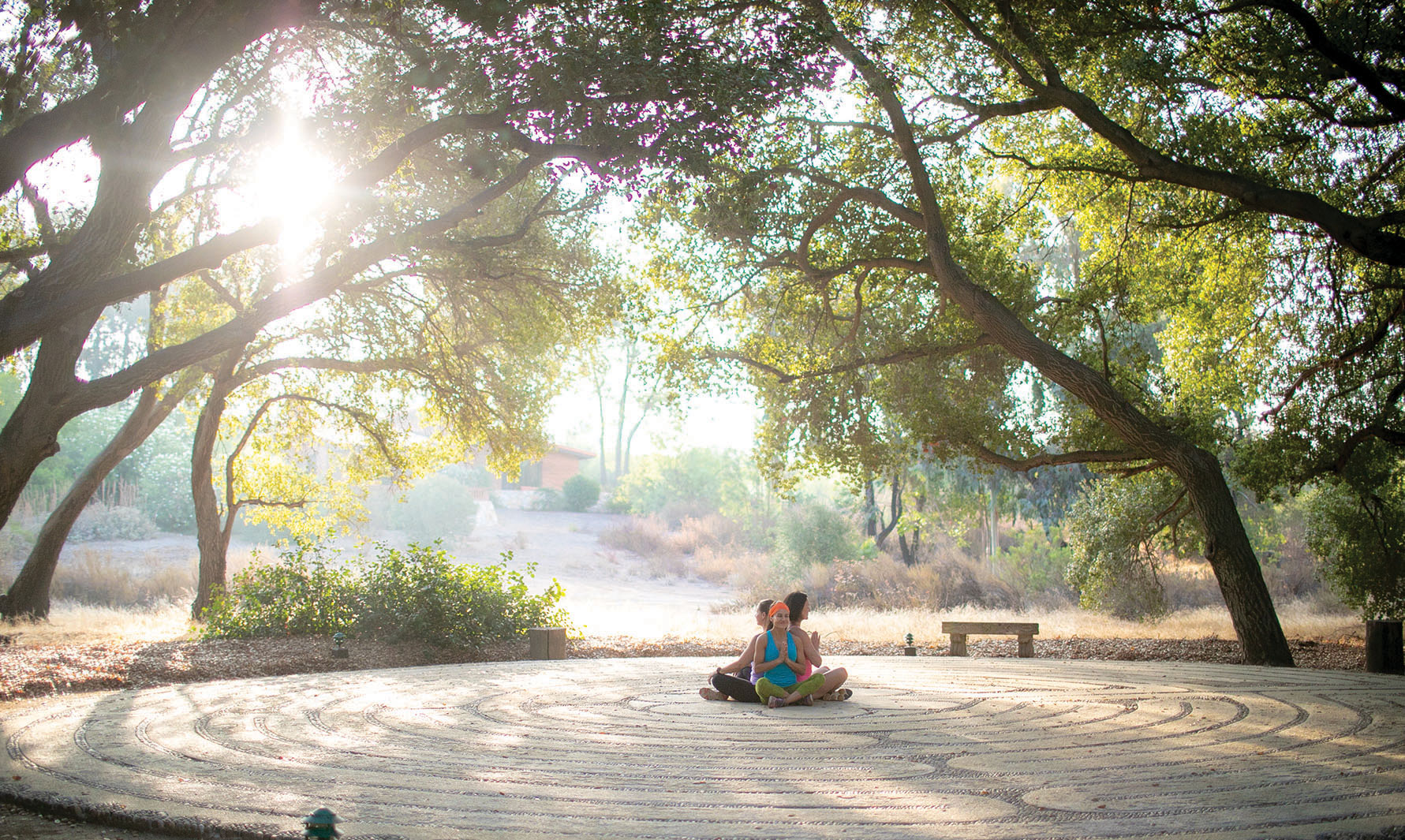
a long terrace and the brick barrel-vaulted roofs of guest suites intersect the salt-chlorinated pool's concentric circular forms
What to ask them
What is the water source, and what treatment is applied before it reaches a guest room?
Is there a published contaminant test panel, and which laboratory ran it?
Is shower and bath water filtered, and to what specification?
How are pools and spas sanitised, and is the chemistry published?
How is drinking water delivered, and is it treated on site?
Light Rhythm2 source notesPublished or supplied
Light is what tells a body the time of day. The part a building controls is what its fittings emit and when, which a named product or a colour temperature makes checkable.
Daylight and darkness in each suite are controlled by a named physical device: a custom wooden gate with small blinds on every archway, which shades the room without closing the view.
A custom-made wooden gate is applied to each archway with small blinds that provide privacy without completely obscuring the view of the landscape, and that also allows air circulation to create a more pleasant climate inside each of the eleven rooms
Suites are described as carrying clerestories above louvered doors, so daylight enters high in the vault. No colour temperature, lux level or blackout specification is published.
The property's public spaces, at right, are completely open to the elements, while guest suites, behind, feature clerestories and louvered doors in Macuili and oak for privacy.
What to ask them
Is guest room lighting tunable or circadian, and what specification is published?
What colour temperatures are used in the evening, and are fixtures flicker free?
Do sleeping areas have full blackout, and is it specified?
What daylight access does a typical room have?
Is exterior lighting shielded or reduced overnight?
EMF HarmonyNo evidence recordedNothing found yet
Wiring, routers and devices put electromagnetic fields in a room. What a building decides is where they sit relative to the bed, and whether anyone has measured it.
We found nothing published on this. That is a gap in what we could read, not a finding about the building.
What to ask them
Are guest rooms wired for data, or is access wireless only?
Where are wireless access points and smart meters placed relative to the bed?
Have field levels been measured in sleeping areas, and by whom?
Can a guest have wireless disabled in their room on request?
Is any shielded cabling or shielding material specified in the build?
Materials and Textiles4 source notesPublished or supplied
The things you sleep on and touch: the mattress, the sheets, the pillows, and the paints, glues and finishes around them. A named fabric, a fibre content or a certification can be looked up. A structural palette tells you about the building, not about the bed.
The building material is named to its maker and its rule: sand-coloured bricks hand-crafted by local artisans, with synthetic products avoided wherever possible. No emissions class or finish chemistry is published.
Hand-crafted by local artisans, the sandy-hued bricks represent the Casona's imperative to build with locally produced materials and avoid synthetic products wherever possible.
Soft furnishings are named by craft and by place of making: rugs woven in Teotitlan del Valle, palm-leaf lamps from Veracruz, curtains, chairs and hammocks from the Yucatan.
Rugs were woven in the small village of Teotitlán del Valle, and palm-leaf lamps came from the port city of Veracruz. Curtains, chairs and hammocks were fabricated in the Yucatán Peninsula.
A third party publisher records the bathroom amenities as made in house by the Pueblo del Sol artisan community and the room textiles as raw linen and cotton.
Published by Girls Who Eat, Non-Toxic Travel Made Simple, read 19 Aug 2026.
Organic bath products (honey soap, shampoo) are made in-house by the Pueblo del Sol indigenous artisan community, and raw linen and cotton textiles are in all rooms.
The property states a sourcing rule for its furniture timber: no excessive logging, and wood taken from trees that have completed their natural cycle. No species or supplier is named.
Following the statute of no excessive logging but rather using wood from trees that have completed their natural cycle.
What to ask them
What are the mattresses made of, and are they treated with flame retardants?
What is the fibre content of the linen, and is it certified, for example to GOTS or OEKO TEX?
Which paints, adhesives and sealants were specified, and are they low emission?
What cleaning and laundry products are used, and is the list published?
Are there named low emission certifications on the flooring or joinery?
Food and Kitchen3 source notesPublished or supplied
What a kitchen cooks with and where it buys are the parts of a stay you take inside you. A named oil, a named supplier or a published share is checkable; “healthy” is not.
Three kitchen ingredients are traced to a named growing project the hotel funds: honey, vanilla and coffee from Pueblo del Sol in the Oaxacan mountains.
we use honey, vanilla, and coffee as ingredients grown in our sister project, Pueblo del Sol, in the Oaxacan mountains
The fish handling method is named. Daily catch is dispatched by ikejime, and the produce is stated to be non-GMO and local. No grower, boat or certification is named.
Daily fishing is carried out using the ikejime technique, promoting responsible and respectful fishing practices in the marine ecosystem.
The kitchen is described as farm to table, drawing on the orchards of local producers who work seasonal and non-intensive harvest cycles, with no share of the menu quantified.
Sforza House is committed to a culinary proposal based on the farm-to-table principle, guaranteeing the freshness of the ingredients of each dish, which come from the orchards of local producers that respect the seasonal and non-intensive harvest cycles.
What to ask them
What share of produce is grown on site or sourced locally, and is it verified?
Which cooking oils are used, and is the policy published?
What cookware is used in the kitchen?
Is kitchen and ice water filtered, and to what specification?
Is there a published position on additives, preservatives or allergens?
Biophilic and Healing Design3 source notesPublished or supplied
Daylight, planting, outlook and the way a room meets the outside are what make a place feel the way it does. Named design decisions can be checked; atmosphere cannot.
The siting rule is published as a number: less than 30 percent of the one-acre site was cleared, and the mangroves, oaks and cypress that were there were left standing.
They cleared less than 30 percent of the natural landscape of mangroves, oaks, and cypress. "We sited the buildings to cause the least amount of intrusion and to take advantage of the views, ocean breezes, and offshore winds," notes Kalach
The scheme is attributed to a named architect and studio, Alberto Kalach of Taller de Arquitectura X, and to a published form decision: ten brick vaults of varying height facing the Pacific, arranged around a circular pool.
The resort consists of arched volumes of varying heights, which are arranged in an asymmetrical manner. The vaulted shape offers several benefits, including being able to withstand earthquakes and allowing positive energy to flow into the suites, the team said.
The property states that only 30 percent of the land was built on and that the planted areas carry endemic vegetation, with the design described as following principles of bio-geometry.
We have utilized only 30% of the land, allowing nature to retain its space. The design of our facilities is based on principles of bio-geometry, respecting the harmony between the built environment and the surrounding nature. Our green areas feature endemic vegetation, preserving local biodiversity.
What to ask them
Does every guest room have direct outdoor access or an operable opening?
What is the published design intent behind the natural materials used?
What are the typical ceiling heights and room volumes?
Was the landscape designed with native planting, and is the palette published?
Sound and Sensory EcologyNo evidence recordedNothing found yet
What you can hear at three in the morning decides whether you slept. Insulation, plant and machinery, and what sits next door are what decide it.
We found nothing published on this. That is a gap in what we could read, not a finding about the building.
What to ask them
What is the measured background noise level in a guest room at night?
What acoustic separation is specified between adjoining keys?
How loud is the guest room air conditioning at its lowest setting?
Is fragrance diffused into guest rooms or public areas, and can it be declined?
Not everything is published, and an empty row is a gap in what we could read rather than a fault in the building. If one of these matters to you, ask the property before you book. Send us something that updates this record
Certifications
MICHELIN Key
Issued by MICHELIN Guide
Property
Awarded: Not stated · Valid until: Not stated · Source checked: 19 Aug 2026
Issued by Girls Who Eat, Non-Toxic Travel Made Simple
Property
Awarded: Not stated · Valid until: Not stated · Source checked: 19 Aug 2026
Gold Star, listed by Girls Who Eat, whose award text describes non-toxic practices across air quality, cleaning products, food sourcing and bedding; we have not verified this
Gold Star, listed by Girls Who Eat, whose award text describes non-toxic practices across air quality, cleaning products, food sourcing and bedding; we have not verified this
Feature sources and certification records show their own scope and dates.
Compare what each stay offers, how it was checked and what still needs confirming. Assessment labels describe the review, not an overall quality rating.
A low score means a property has not published information. It does not mean the property is unsafe, unhealthy or poorly run.
These scores describe disclosure, not property quality. Listings are free, and any commercial relationship is disclosed.